- Products
- Catalogs
- News & Trends
- Exhibitions
aquafeed brochure
aquafeed brochure
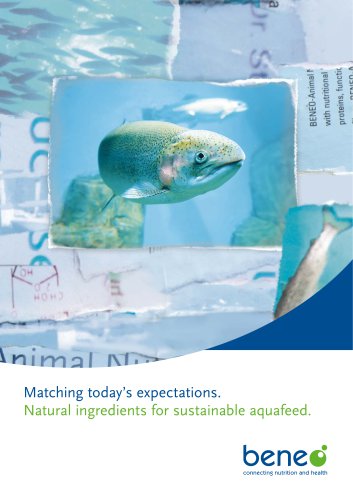
Aquaculture plays a crucial role in global animal protein production, necessitating the enhancement of aquafeed quality. BENEO provides natural ingredients such as vegetal proteins, prebiotic fibers, and functional starches to fulfill the demand for sustainable aquafeed.
Vegetal Proteins as Fish Meal Alternatives
Fish meal, a key protein source in aquafeed, faces sustainability and cost issues. BENEO's vital wheat gluten, containing over 80% protein, is a viable alternative, supporting equal or improved growth performance in various fish species.
Prebiotics for Gut Health
Traditional antibiotics in aquaculture pose risks like antibiotic resistance. BENEO's prebiotics, including inulin and oligofructose, enhance gut health by fostering beneficial bacteria, reducing harmful bacteria, and boosting disease resistance.
Technological Quality of Aquafeed
The physical properties of aquafeed, such as water stability and sinking rate, are essential. Vital wheat gluten enhances these properties by improving water stability and oil absorption. Rice starch, although lower in nutritional value, provides excellent binding and expansion characteristics, enhancing pellet buoyancy and production efficiency.
Conclusion
BENEO's ingredients, such as vital wheat gluten and rice starch, offer sustainable and effective solutions for aquafeed, addressing both nutritional and technological needs. Their expertise spans various areas, providing comprehensive support for aquafeed producers.
Catalog excerpts
Matching today's expectations. Natural ingredients for sustainable aquafeed. connecting nutrition and health
Open the catalog to page 1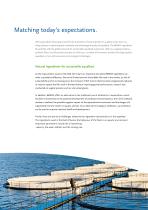
Matching today’s expectations. With aquaculture becoming crucial for the production of animal protein on a global scale, there is a rising interest in optimising the nutritional and technological quality of aquafeed. The BENEO ingredients fit perfectly with the global demand for sustainable aquafeed production. With our vegetal proteins, prebiotic fibres and functional starches we offer you a number of innovative solutions for high-quality aquafeed, in line with economic and ecological challenges. Natural ingredients for sustainable aquafeed. As the major protein source in fish feed, fish meal...
Open the catalog to page 2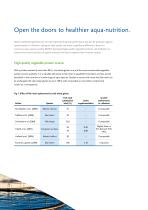
Where nutritional ingredients are not only important for growth performance, but also for protection against contamination or infection, opting for high quality can make a significant difference. Based on numerous aqua species studies BENEO developed high-quality vegetable proteins and prebiotics to improve the overall nutrition of aquatic animals and help strengthen their immune system. With a protein content of more than 80%, vital wheat gluten is one of the most concentrated vegetable protein sources available. It is a valuable alternative to fish meal in aquafeed formulations and has proven...
Open the catalog to page 3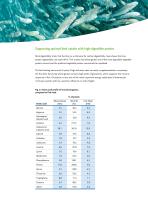
Supporting optimal feed uptake with high-digestible protein. Mink digestibility trials, that function as a reference for salmon digestibility, have shown that true protein digestibility can reach 99 %. This makes vital wheat gluten one of the most digestible vegetable protein sources and the preferred vegetable protein concentrate for aquafeed. The first limiting amino acid is lysine; if high inclusion rates are used, a supplementation is necessary. On the other hand vital wheat gluten contains high levels of glutamine, which supports the immune response in fish. Glutamine is also one of the...
Open the catalog to page 4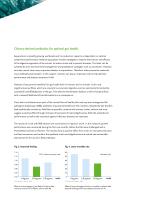
Chicory-derived prebiotics for optimal gut health. Aquaculture is steadily growing worldwide and its production capacity is dependent on optimal zootechnical performance. Rational aquaculture involves strategies to improve the function and efficacy of the digestive apparatus of the animal, to reduce stress and to prevent diseases. The latter can be achieved by strict environmental management and prophylactic strategies such as vaccination. However, vaccines cannot cover every important disease in aquaculture. Therefore, other preventive measures must preferably also be taken. In this respect,...
Open the catalog to page 5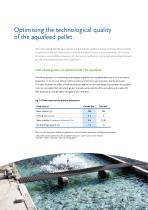
When formulating diets for aqua species, it is not only the nutritional content of the feed that should be considered; the physical characteristics of the final product are also of great importance. For instance, the texture, water stability or buoyancy of a diet can be modified not only by feed processing techniques, but also by the physical nature of the ingredients. Vital wheat gluten is an interesting technological ingredient for aquafeed diets due to its visco-elastic properties. It serves as a strong cohesive matrix and prevents gas expulsion during extrusion. The table illustrates the...
Open the catalog to page 6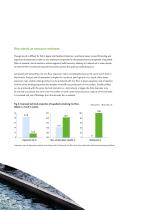
Rice starch: an extrusion enhancer. Though starch is difficult for fish to digest and therefore limited as a nutritional value, its specific binding and expansion characteristics make it a very important component for the physicochemical properties of aquafeed. When it expands, starch reaches a certain degree of pellet porosity, allowing it to absorb oil or other liquids, to meet the fish’s nutritional requirements and to achieve the optimum pellet buoyancy. Compared with wheat flour, the rice flour expansion rate is considerably lower at the same starch level in the formula. And yet, the oil...
Open the catalog to page 7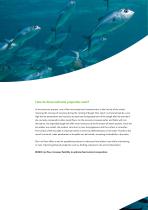
How do these technical properties work? In the extrusion process, one of the most important characteristics is the hot-set of the starch, meaning the increase of viscosity during the cooling of dough. Rice starch is characterised by a very high hot-set temperature and viscosity increase rate during expansion of the dough after the extruder’s die, certainly compared to other cereal flours. As the viscosity increases earlier and faster with rice derivatives, the expanded dough will offer more resistance to the formation of steam pockets. Once the extrudates are cooled, the product structure is...
Open the catalog to page 8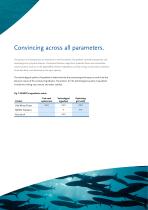
Two groups of characteristics are important in the formulation of aquafeed: nutritional properties and technological or physical features. Nutritional features range from prebiotic fibres and sustainable, natural protein sources, to the digestibility of these ingredients and the energy content they contribute to the fish feed, and ultimately to the aqua species. The technological quality of aquafeed is determined by the processing techniques as well as by the physical nature of the involved ingredients. Parameters for the technological quality of aquafeed include the sinking rate, texture and...
Open the catalog to page 9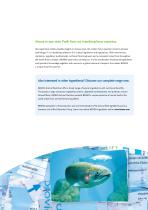
Always at your side: Profit from our interdisciplinary expertise. Our experience entails valuable insights in various areas. No matter if your question concerns process technology, if it is marketing related or if it is about legislation and regulations. With nutritionists, marketers, regulatory professionals, technical food engineers and a competent sales force throughout the world, there is always a BENEO expert who can help you. It’s the combination of advanced ingredients and specialist knowledge together with access to a global network of experts that makes BENEO a unique business partner....
Open the catalog to page 10
Gatesoupe, F.J. 2008. Updating the Importance of Lactic Acid Bacteria in Fish Farming: Natural Occurrence and Probiotic Treatments. Journal of Molecular Microbiology and Biotechnology 14(1-3), 107–114. Boon, H. and BENEO Technical Staff. 2015. Functional aspects of rice starch in aquafeed formulation and production. Aquafeed 7(3), 4-7. Helland, S.J. and Grisdale-Helland, B. 2006. Replacement of fish meal with wheat gluten in diets for Atlantic halibut (Hippoglossus hippoglossus): effect on whole-body amino acid concentrations. Aquaculture 261(4), 1363-1370. Kaushik, S. J. 2000. Feed formulation,...
Open the catalog to page 11All BENEO catalogs and technical brochures
 Palatinose™ in beverages
7 Pages
 Vital Wheat Gluten brochure
8 Pages
 functional fibre brochure
12 Pages
 galenIQ™
4 Pages
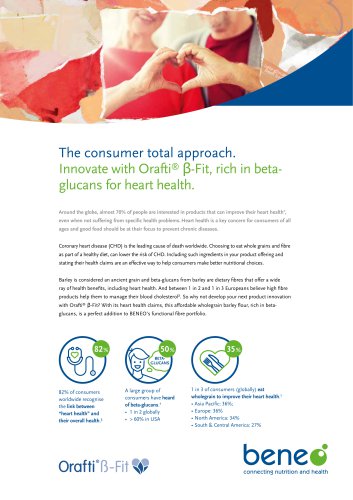 beta-glucans leaflet
4 Pages
 Meatless® portfolio leaflet
4 Pages
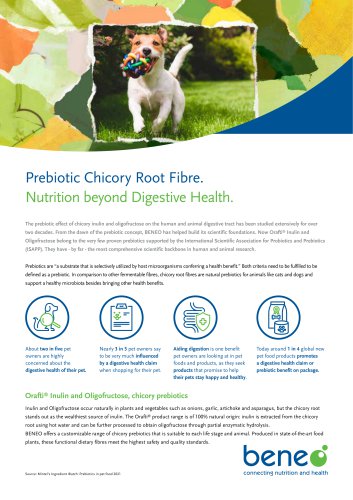 Prebiotic Chicory Root Fibre
2 Pages
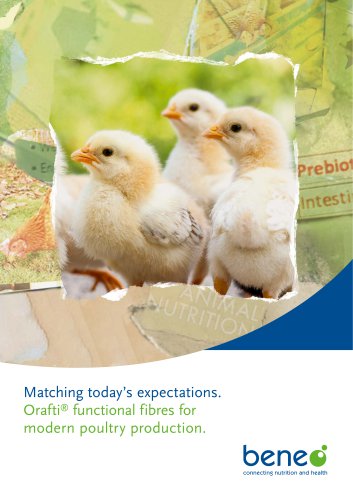 Matching today’s expectations.
12 Pages