

OWNER'S MANUAL - 110

OWNER'S MANUAL - 110
This manual provides essential instructions for the safe and effective use of a sickle bar mower. It emphasizes the importance of thoroughly reading the manual before operation to prevent accidents. The manual includes explanations of the machine's components, operational guidelines, and maintenance instructions. Note that illustrations and specifications may vary by country and are subject to change without notice.
The sickle bar mower complies with various EU directives and regulations, including 2006/42/EC, 2014/30/EU, and (EU) 2016/1628. It adheres to harmonized standards such as EN 12733:2018 and EN ISO 14982:2009.
The mower consists of several key components including an on/off switch, handle, propulsion lever, cutter bar control lever, throttle trigger, and fuel tank cap. Each part is crucial for the mower's operation and safety.
Users are warned about the risk of hearing damage due to noise levels that can reach or exceed 85 dB(A) during normal operation. The manual advises on the importance of understanding safety symbols and warnings to ensure safe usage.
Detailed instructions are provided for assembling the mower and preparing it for use. This includes starting procedures, operational controls, and safety measures to be observed during use.
Regular maintenance is crucial for the longevity and performance of the mower. The manual includes a maintenance chart and troubleshooting guide to assist users in identifying and resolving common issues.
Technical specifications such as weight, power output, and operational speed are provided to ensure users have a comprehensive understanding of the mower's capabilities.
A warranty certificate is included, outlining the terms and conditions under which the mower is covered.
This document provides explanations of symbols and safety warnings in multiple languages, including Italian, English, French, German, Spanish, and Dutch. It covers essential safety information for operating a sickle bar mower.
The machine brand and model are specified, along with technical data. Weight and power data are based on a standard configuration, and variations in engine and equipment can alter these values. Includes serial number, CE conformity marking, machine type (sickle bar mower), and year of manufacture.
Exposure to vibrations from prolonged use of combustion engine tools can cause damage to blood vessels or nerves, especially in cold weather. Users with pacemakers should consult a doctor due to potential electromagnetic interference. National regulations may limit machine use. Operators must read and understand the manual, and only adults should operate the machine. Do not operate the machine when fatigued, ill, or under the influence of substances. Maintain a safe distance of 15 meters from children, bystanders, and animals. Wear approved protective clothing, including safety boots, goggles, and noise protection. Check the machine daily for operational safety devices. Plan work carefully, ensuring a clear area and secure footing. The mower is intended exclusively for cutting grass and should not be used for other materials. Ensure all accessories conform to European safety regulations.
Operate on slopes with caution, working across rather than up or down. Do not use the machine on gradients over 10° (17%). Ensure no one is within a 20-meter radius when operating on steep slopes. Maintain a safe distance from the cutter bar during operation.
The owner or operator is responsible for accidents or damage to third parties or property. All interventions beyond those specified in the manual should be performed by qualified personnel.
The handlebar can be adjusted to six different heights using the vertical adjustment lever to ensure the correct working position for the operator.
Gasoline is highly flammable. Handle with extreme caution, avoiding smoking or open flames near the fuel or machine. Fuel and fumes can cause serious injury if inhaled or in contact with skin. Ensure adequate ventilation when handling fuel. Be aware of carbon monoxide poisoning risks. Store and transport fuel in approved containers. Refuel outdoors, away from sparks or flames, and only after the engine has cooled. Loosen the fuel cap slowly to release pressure and prevent spills. Tighten the fuel cap securely after refueling to prevent loosening due to vibrations. Wipe any spilled fuel and allow it to evaporate before starting the engine, maintaining a distance of 3 meters from the refueling site. Store fuel in a cool, dry, well-ventilated place, away from combustible materials and potential ignition sources. Never remove the fuel cap while the engine is running or use fuel for cleaning. Avoid fuel contact with clothing; change clothes and wash skin if contact occurs. Keep fuel out of direct sunlight and out of reach of children.
This unit is equipped with a four-stroke engine. Use clean, unleaded gasoline with an octane rating of 89 ([R + M] / 2) or higher. Avoid using old or dirty gasoline or oil/gasoline mixtures. Prevent dirt or water from entering the fuel tank.
Follow safety instructions for fuel use. Always stop the engine before refueling. Do not add fuel while the engine is running or hot. Maintain a distance of at least 3 meters from the refueling site before restarting the engine. Clean the area around the fuel cap to prevent contamination. Loosen the fuel cap slowly and pour fuel carefully to avoid spills. Inspect and clean the gasket before replacing the fuel cap.
Ensure the fuel cap is tightened by hand and clean any spilled fuel with a cloth. Check for fuel leaks and address them before using the unit. If necessary, consult an authorized service center. Always wear protective gloves during maintenance. Use unleaded gasoline with an octane rating of 89 or higher. Avoid using stale or contaminated gasoline or oil/gasoline mixtures. Prevent dirt or water from entering the fuel tank. Follow safety instructions for fuel handling: shut off the engine before refueling, do not refuel a running or hot engine, and move at least 3 meters away from the refueling site before starting the engine. Do not smoke during refueling.
Check the engine oil level on a level surface with the engine stopped. If low, fill with recommended oil slowly to avoid overflow. Check the oil level every 10 hours of continuous operation. Use 4-stroke or equivalent high detergent motor oil certified for SG, SF classifications. SAE10W-30 is recommended for all temperatures. Operating temperature range is -5°C to 40°C. Using non-detergent or 2-stroke oil may shorten engine life.
Read the engine instruction manual carefully. Do not wrap the starter rope around your hand. Position yourself in the designated area before starting. Set the switch/throttle to the "MAX" position for starting. Do not lift the machine during startup and only tilt it when in the working position.
The machine is designed for agricultural use only. Any other use is considered improper and voids the warranty and manufacturer's liability. Always read the engine manual carefully for detailed start-up procedures. Never wrap the starter cord around your hand. Do not lift the machine when starting the engine. The machine should only be tilted when the operator is in position behind the handlebars.
Stand in the designated area to start the machine. Set the switch/throttle to the "MAX" position. Always grip the machine with both hands when the engine is running.
Propulsion lever: Operate to drive the wheels, release by pressing the safety lock. Cutter bar control lever: Operate to set the cutter bar in motion, release by pressing the safety lock.
Use the machine only in well-ventilated areas, avoiding explosive or flammable environments. Do not operate the machine at night or use it to cut materials other than grass. Never use the machine to push or tow accessories. Do not connect the machine to equipment not specified by the manufacturer. Ensure all safety systems are in place before operation.
Do not use the machine for breaking up fence posts, walls, or trees. Do not transport people or objects on the machine. Avoid using the machine in enclosed environments due to the risk of carbon monoxide poisoning.
Do not use the machine on unstable, slippery, icy, stony, or uneven ground. Avoid waterlogged or swampy areas where the soil consistency is uncertain. Never operate on surfaces with different levels, such as paving or steps. The machine is designed for use by one operator only and must be operated with both hands to prevent serious injury. Do not allow anyone to inspect the machine while it is running.
Check the safety and efficiency of the machine, ensuring all security devices function correctly and the handlebar is securely fastened. Inspect the cutter bar for wear and ensure it is properly tightened. Verify that the tyres are inflated to the correct pressure and mounted correctly, with the tread pattern pointing in the direction of travel. Ensure the work area is clear of obstacles and that help can be summoned in case of an accident.
Ensure no people or animals are in the work area before starting the engine. Inspect the work area thoroughly for obstacles such as roots, rocks, and branches. Be aware of underground pipes and cables to avoid electric shock or damage. Keep handgrips and levers clean and dry, and follow instructions carefully when starting the engine. Always walk with the machine, never run, and ensure adequate room for maneuvering, especially near walls and slopes. When control levers are released, the machine automatically shifts to neutral. Never leave the machine on inclined surfaces.
Pre-Operation Checks: Ensure the absence of underground pipes and electrical cables to prevent severe injuries or fatalities due to electric shock. The machine is not insulated, so always be cautious of buried utilities. Machine Usage: Maintain dry, clean handles free from oil or fuel. Start the engine carefully, keeping feet away from tools. Walk with the machine, never run, and ensure adequate maneuvering space, especially near obstacles like walls and hedges. Exercise caution when changing direction, particularly on slopes. Safety Precautions: Do not modify the engine speed governor. Keep hands and feet away from moving parts. Never lift the machine while the engine is running. Slow down the engine before turning it off. Do not leave the machine unattended with the engine running; stop it before refueling or performing maintenance. Handling Foreign Objects: Stop the machine if it strikes a foreign object and inspect for damage. Be cautious when wearing hearing protection as it may limit the ability to hear danger signals. Do not lean over the cutter bar to avoid injury from debris. Always stop the engine before cleaning or removing trapped materials.
Exercise caution when wearing hearing protection as it may impair your ability to hear warning sounds. Do not lean over the cutting bar to avoid injury from debris. Always turn off the engine before clearing obstructions.
Do not tamper with safety devices. Ensure they are in perfect working order. The machine includes a dead man lever and emergency devices to stop movement when the handlebars are released.
To stop the engine, set the switch/throttle to "O" (STOP). Ensure the machine is parked on a stable surface. If the switch fails, use the choke lever to stop the engine. The cutting attachment must not move when the power take-off is released.
Use the propulsion lever for moving the machine. Avoid driving on public roads and ensure the machine is securely fastened during transport. Use certified loading ramps and ensure the machine is transported horizontally with an empty tank.
When transporting the machine, ensure it is not driven on public roads and is not towed. Use a suitable vehicle with adequate power and size, ensuring the machine is securely fastened with straps. Transport the machine horizontally with an empty tank, adhering to current transportation regulations. Use certified loading ramps with non-slip surfaces, or secure the machine to a pallet for forklift loading by an authorized operator. Do not lift the machine with straps, chains, or hooks as it lacks anchorage points.
The engine and its emissions control system must be operated and maintained according to the user manual to comply with legal emissions requirements for non-road mobile machinery. Avoid tampering with the emissions control system. Incorrect operation or maintenance can lead to system malfunctions, violating legal standards. Examples include forcing fuel metering devices, using incorrect fuel or oil, using non-original spare parts, and improper maintenance of the exhaust system. Tampering invalidates EU emissions certification.
Before maintenance, stop the engine and disconnect the spark plug cap. Wear safety shoes and gloves. Do not use a damaged or improperly repaired machine. Ensure the cutter mechanism stops when the control lever is released. Only skilled technicians should perform servicing beyond the manual's instructions. Use only recommended accessories and parts. Do not touch the cutter mechanism while the engine is running. Dispose of non-serviceable machines responsibly. Replace damaged safety devices and worn blades immediately. Be cautious of hot engine parts to avoid burns. Keep all fasteners tight for safe operation. Do not use water jets or solvents for cleaning. Store the machine in a dry place with an empty fuel tank, out of children's reach.
General Safety Precautions: Ensure the machine is stable when lifted or placed on its side to prevent accidental overturning. Always read the engine manual carefully before operation. For maintenance, turn off the engine and disconnect the spark plug cap. Wear protective footwear and gloves. Do not use a damaged or improperly repaired machine. Ensure the cutting tool stops when the control lever is released. Only specialists should perform interventions not covered in the manual. Use only recommended accessories and spare parts. Do not touch the cutting tool or perform maintenance while the engine is running. Dispose of the machine according to environmental regulations when it reaches the end of its life. Replace any damaged safety devices immediately. Avoid touching hot parts of the machine, such as the muffler and engine components, to prevent burns. Keep nuts, bolts, and screws tight to ensure safe operation. Do not use water jets or solvents for cleaning. Store the machine in a dry place with an empty tank, out of children's reach.
Carburetor Adjustment: Do not modify the carburetor to avoid violating exhaust emission laws. Starter Unit: The coil spring is under tension and should not be disassembled or modified to prevent injuries. Oil Change: Dispose of used motor oil environmentally. Take it to a local service station in a sealed container. Transmission Oil: Check the oil level every 50 working hours. Change the transmission oil every 200 hours. Use STOU 15W-40 oil and ensure the transmission is horizontal during checks and refills.
Before storing the machine for an extended period, ensure the engine cools down, empty the fuel tank, and dispose of fuel according to environmental regulations. Clean the machine without using water jets or solvents and store it in a covered, level area out of children's reach. For restarting after winter, follow the normal start-up procedures.
Most materials used in the machine are recyclable, including metals like steel, aluminum, and brass. Contact local waste services for disposal information, ensuring no contamination of soil, air, or water. Destroy the CE label and manual when scrapping the machine.
The machine features a 4-stroke engine with a power output of 4.0 kW. It has a mechanical gearbox with one forward speed and a cutter bar width of 92 cm. The machine's weight is 70 kg, and it operates at a speed of 2.30 km/h with the engine at 3200 rpm. Acoustic pressure levels are measured at 94.9 dB(A) with a guaranteed sound power level of 107.0 dB(A). Vibration levels are 11.0 m/s² (left) and 14.0 m/s² (right).
Regular inspections should be conducted for leaks, cracks, and wear. Monthly checks include controls, fuel tank, and air filter cleaning. Replace the fuel filter and air filter every six months. Transmission oil should be checked every 50 hours and replaced every 200 hours.
If the engine fails to start or stops shortly after starting, ensure all possible causes are checked. If unresolved, consult an authorized service center.
Engine Issues: If the engine does not start or stops shortly after starting, check for spark at the spark plug and ensure there is fuel. If the engine starts but does not accelerate properly, the carburetor may need adjustment. Excessive smoke or failure to reach full speed may indicate a dirty air filter or require carburetor adjustment. Mechanical Problems: Premature breakage of tools may be due to stony soil, requiring a preliminary inspection. Excessive noise can be caused by damaged or loose tools, loose protective covers, or insufficient lubrication. Abnormal vibrations may also indicate damaged tools or loose elements.
The machine is guaranteed for 24 months for private use and 12 months for professional use. The warranty covers defects in materials and workmanship but excludes consumables and normal wear parts. To claim warranty, present the warranty certificate with the dealer's stamp and proof of purchase. The warranty is void if the machine is improperly maintained, used incorrectly, modified, or repaired by unauthorized personnel. Damage during transport must be reported immediately to the carrier to maintain warranty validity.
The warranty is valid from the date of purchase. The manufacturer will replace defective parts due to material, workmanship, and production issues free of charge through its sales and technical support network. This warranty does not negate the buyer's legal rights under the Civil Code against defects or anomalies caused by the sold item. Technical personnel will intervene as quickly as possible within organizational constraints. To request warranty service, the warranty certificate, stamped by the dealer and fully completed, must be presented along with the purchase invoice or receipt. The warranty is void in cases of: lack of maintenance, incorrect use or unauthorized modifications, use of inappropriate lubricants or fuels, use of non-original spare parts or accessories, and interventions by unauthorized personnel. Consumable parts and those subject to normal wear and tear are excluded from the warranty. The warranty excludes product updates and improvements. The warranty does not cover adjustments and maintenance required during the warranty period. Any transport damage must be reported immediately to the carrier, or the warranty will be void. For engines from other brands installed on our machines, the warranty provided by the engine manufacturer applies. The warranty does not cover direct or indirect damages to persons or property resulting from machine failures or prolonged non-use.
Catalog excerpts

OWNER’S MANUAL MANUEL D’UTILISATION ET D’ENTRETIEN
Open the catalog to page 1
ISTRUZIONI ORIGINALI Per un corretto impiego della falciatrice e per evitare incidenti, non iniziare il lavoro senza aver letto questo manuale con la massima attenzione. Su questo manuale sono indicate le spiegazioni di funzionamento dei vari componenti e le istruzioni per i necessari controlli e per la manutenzione. N.B. Le descrizioni e le illustrazioni contenute nel presente manuale si intendono non rigorosamente impegnative. La Ditta si riserva il diritto di apportare eventuali modifiche senza impegnarsi ad aggiornare di volta in volta questo manuale. TRANSLATION OF ORIGINAL INSTRUCTIONS...
Open the catalog to page 2
INTRODUZIONE____________________ 2 DICHIARAZIONE DI CONFORMITÀ______ 4 COMPONENTI DELLA FALCIATRICE_____ 5 SPIEGAZIONE SIMBOLI E AVVERTENZE DI SICUREZZA___________ 6 NORME DI SICUREZZA_______________ 8 ASSEMBLAGGIO____________________ 14 AVVIAMENTO______________________ 16 USO E SICUREZZA___________________ 26 DISPOSITIVI DI SICUREZZA____________ 34 D INHALT ARRESTO MOTORE__________________ 36 ERLAUTERUNG DER SYMBOLE UND SICHERHEITSHINWEISE_______________ 6 WARTUNG_________________________ 41 OPTIONALES ZUBEHÖR______________ 49 ACCESSORI OPZIONALI______________ 48 DATI TECNICI_______________________...
Open the catalog to page 3
KONFORMITATS ERKLARUNG EMAK spa via Fermi, 4 - 42011 Bagnolo in Piano (RE) ITALY dichiara sotto la propria responsabilità che la macchina: declares under its own responsibility that the machine: déclare sous sa propre responsabilité que la machine: erklärt auf eigene Verantwortung daß die Maschine: declara bajo su responsabilidad que la máquina: verklaart, onder eigen verantwoordelijkheit, dat de machine: 1. Type: sickle bar mower BERTOLINI 110 - NIBBI FC 110 3. identificazione di serie B65 XXX 0001 ÷ B65 XXX 9999 è conforme alle prescrizioni della Direttiva / Regolamento e successive modifiche...
Open the catalog to page 4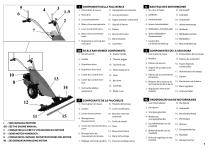
COMPONENTI DELLA FALCIATRICE 10. Tappo serbatoio carburante 4. Blocco leva avanzamento 5. Leva movimento barra 6. Blocco leva movimento barra 7. Regolazione verticale del manubrio 14. Barra falciante 15. Coprilame GB SICKLE BAR MOWER COMPONENTS 4. Propulsion lever lock 4. Seguro de la palanca de avance 5. Cutter bar control lever 5. Palanca de accionamiento de la barra 6. Cutter bar control lever lock 7. Vertical handlebar adjustment 14. Cutterbar 15. Blade cover I - VEDI MANUALE MOTORE GB - SEE THE ENGINE MANUAL F - CONSULTER LE LIVRET D’UTILISATION DU MOTEUR D - SIEHE MOTOR-HANDBUCH E - CONSULTAR...
Open the catalog to page 5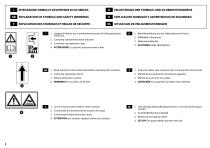
SPIEGAZIONE SIMBOLI E AVVERTENZE DI SICUREZZA ERLÄUTERUNG DER SYMBOLE-UND SICHERHEITSHINWEISE EXPLANATION OF SYMBOLS AND SAFETY WARNINGS EXPLICACION SIMBOLOS Y ADVERTENCIAS DE SEGURIDAD EXPLICATION DES SYMBOLES ET REGLES DE SECURITE 1. Leggere il libretto uso e manutenzione prima di utilizzare questa macchina. 2. Comando azionamento barra falciante 3. Comando avanzamento ruote 4 - ACHTUNG! Heiße Oberflächen 4. ATTENZIONE! Le superfici possono essere calde 1. Betriebsanleitung vor der Inbetriebsnahme lesen. 1. Read operator’s instruction book before operating this machine. 1. Antes de utilisar...
Open the catalog to page 6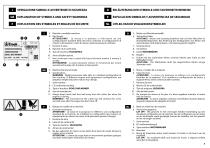
SPIEGAZIONE SIMBOLI E AVVERTENZE DI SICUREZZA ERLÄUTERUNG DER SYMBOLE-UND SICHERHEITSHINWEISE EXPLANATION OF SYMBOLS AND SAFETY WARNINGS EXPLICACION SIMBOLOS Y ADVERTENCIAS DE SEGURIDAD EXPLICATION DES SYMBOLES ET REGLES DE SECURITE S.p.A. Via E. Fermi, 4 - 42011 Bagnolo in Piano - Italy XXXXXXXXXXXXXXX XXXXXXXXXXXX SICKLE BAR MOWER rpm: XXXX 5. Marchio e modello macchina. 6. Dati Tecnici. ATTENZIONE! - La massa e la potenza si riferiscono ad una configurazione standard della macchina. Variando la configurazione di motore e attrezzature i valori di massa e potenza possono cambiare. 7. Numero...
Open the catalog to page 7
NORME DI SICUREZZA ATTENZIONE: L’esposizione alle vibrazioni provocate dall’uso prolungato di strumenti azionati da motori a combustione interna può causare lesioni ai vasi sanguinei o ai nervi delle dita, delle mani e dei polsi nelle persone soggette a disturbi circolatori o gonfiori anomali. L’uso prolungato in condizioni di bassa temperatura è stato associato alla lesione dei vasi sanguigni negli individui altrimenti sani. Se si manifestano sintomi quali insensibilità, dolore, perdita di forza, variazioni nel colore o nella consistenza della cute o perdita del tatto nelle dita, nelle mani...
Open the catalog to page 8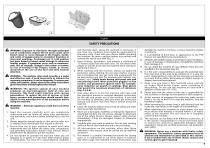
SAFETY PRECAUTIONS WARNING: Exposure to vibrations through prolonged use of combustion engine-driven tools could cause blood vessel or nerve damage in the fingers, hands, and wrists of people prone to circulation disorders or abnormal swellings. Prolonged use in cold weather has been linked to blood vessel damage in otherwise healthy people. If symptoms occur such as numbness, pain, loss of strength, change in skin colour or texture, or loss of feeling in the fingers, hands, or wrists, discontinue the use of this tool and seek medical attention. WARNING - The machine, when used correctly, is...
Open the catalog to page 9
NORMES DE SECURITE AVERTISSEMENT : L’exposition aux vibrations dues à l’utilisation prolongée des instruments actionnés par des moteurs à combustion interne peut engendrer des lésions aux vases sanguins ou aux nerfs des doigts, des mains et des poignets des personnes présentant des problèmes circulatoires (enflures). En outre, il a été démontré que l’utilisation prolongée par temps froid entraînait des lésions des vaisseaux sanguins chez les personnes saines. En cas d’apparitions de symptômes tels que des engourdissements douleurs, pertes de force, changements de la couleur ou de la texture de...
Open the catalog to page 10
SICHERHEITSVORKERUNGEN VORSICHT: Vibrationen infolge längeren Gebrauchs von durch Verbrennungsmotor betriebenen Geräten können bei Personen mit Kreislaufstörungen Schäden an Blutgefäßen sowie an den Nervensträngen von Fingern, Händen und Armgelenken oder Schwellungen verursachen. Auch bei Gesunden können bei längerem Gebrauch in kalter Witterung Schädigungen von Blutgefäßen auftreten. Wenn Symptome wie Taubheit, Schmerzen, Kraftverlust, Veränderungen der Hautfarbe oder -struktur oder E m p f i n d u n g s ve r l u s t i n Fi n g e r n , H ä n d e n o d e r Handgelenken auftreten, arbeiten Sie...
Open the catalog to page 11All Bertolini catalogs and technical brochures
 FLAIL MOWER
168 Pages
 OWNER'S MANUAL - 400
60 Pages
 OWNER'S MANUAL - 401 S
80 Pages
 Product Catalogue 2022
148 Pages
 195
19552 Pages