


Guide on growing spring oilseed rape

Guide on growing spring oilseed rape
For successful spring rape cultivation, ensure quick and even germination by preparing a fine, firm seedbed and rolling it post-sowing. Sow between February and May when soil temperatures reach approximately 8ºC.
Check soil indices and apply phosphorus and potassium to the seedbed if needed. Aim for a nitrogen target of 75-150kg N/ha, ideally in 2-3 applications. The first application should be a DAP or compound NPK for improved nitrogen uptake. Apply sulphur and nitrogen before stem extension and consider micro-nutrients based on soil pH. Plant Growth Regulators are not necessary.
Monitor for flea beetle attacks during emergence and be prepared to spray multiple times. Pigeons are less problematic than in winter oilseed rape, but cold and wet conditions can increase their impact. Monitor pollen beetle presence and refer to AHDB guidelines for control thresholds.
Fungal diseases are less common than in winter oilseed rape. Alternaria can be damaging in warm, humid conditions. For hybrid varieties like Doktrin, one triazole application is recommended for Sclerotinia.
Control broad-leaved weeds with pre-emergence chemicals like BASF Butisan® or Katamaran®. For grasses, use contact products such as BASF Laser® or ADAMA Falcon®.
Avoid early desiccation to ensure full oil content. Desiccate when 90% of seeds in the mid-third of the pods on the main stem are red to dark brown. Often, desiccation is unnecessary, and the crop can be harvested dry after winter wheat.
Catalog excerpts
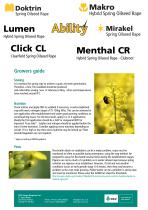
Doktrin Spring Oilseed Rape Makro Hybrid Spring Oilseed Rape Mirakel Spring Oilseed Rape Clearfield Sprinq Oilseed Rape u u c ■ rvi j n n u +.^ a ^ Hybrid Spring Oilseed Rape - Clubroot Growers guide Sowing It is essential for spring rape to achieve a quick and even germination. Therefore, a fine, firm seedbed should be produced and rolled after sowing. Sow in February to May, when soil temperatures have reached around 8°C. Nutrition Check indices and apply P&K to seedbed if necessary. A well-established crop will need a nitrogen target of 75-150kg N/ha. This can be achieved in one application after establishment and under good growing conditions to avoid leaching losses. For the best result, apply in 2 or 3 applications. Ideally the first application should be a DAP or compound NPK for improved N up-take*. Sulphur and nitrogen should be applied before the start of stem extension. Consider applying micro-nutrients depending on soil pH. If it is high or low then micro-nutrients may be locked up. Plant Growth Regulators are not required. * Apply according to RB209 guidance Pests Flea beetle attack on cotyledons can be a major problem, crops must be monitored as often as possible during emergence, using the trap method. Be prepared to spray for flea beetle several times during the establishment stages. Pigeons are not so much of a problem as in winter oilseed rape because spring varieties are vigorous once established. However, if cold and wet weather conditions occurs at early growth stage (1 -6 leaves), then they may become a problem as the crop stops growing. Pollen beetle can be a problem in spring rape and must be monitored. Please view the AHDB fact sheet for thresholds http://cereals.ahdb.org.k/media/176640/is18-monitoring-and-control-of-pollen-beetle-in-oilseed-rape.pdf DSV United Kingdom Ltd. 17 Lynn Road Downham Market Norfolk PE 38 9NJ [email protected] www.dsv-uk.co.uk Innovation for your growth
Open the catalog to page 1
Doktrin Spring Oilseed Rape Lumen Hybrid Spring Oilseed Rape Makro Hybrid Spring Oilseed Rape ^CMirakel Spring Oilseed Rape Diseases Fungal diseases occur less than in winter oilseed rape and spraying may not be economically justified. Alternaria can occur to damaging levels if conditions are favourable (warm and humid weather during flowering and maturation). With a hybrid variety like Doktrin, one application of a triazole is suggested for Sclerotinia. Weeds Broad-leaved weeds Weed control is by application of pre-emergence chemical(s) BASF Butisan® or Katamaran®. If good growing conditions...
Open the catalog to page 2All DSV UK catalogs and technical brochures
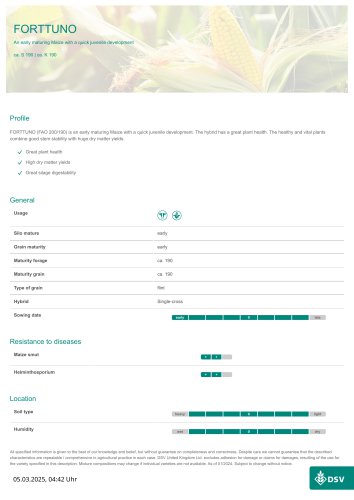 FORTTUNO
2 Pages
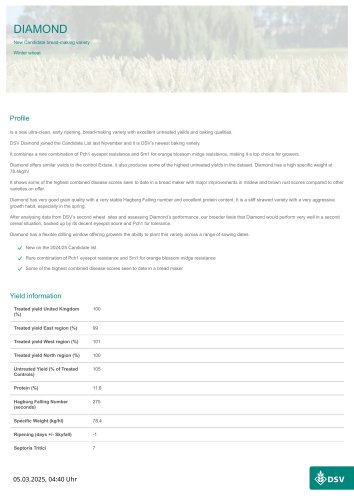 DIAMOND
2 Pages
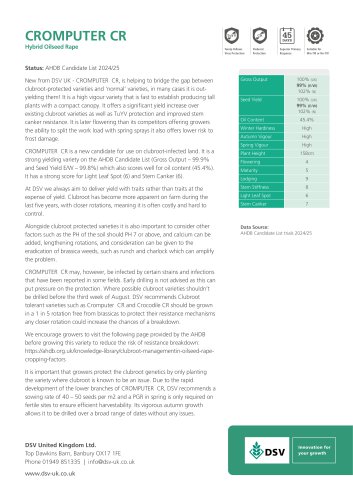 CROMPUTER CR
1 Page
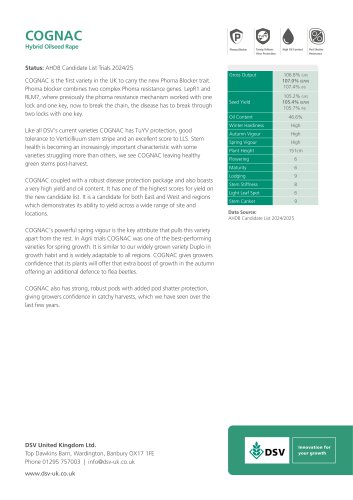 COGNAC
1 Page
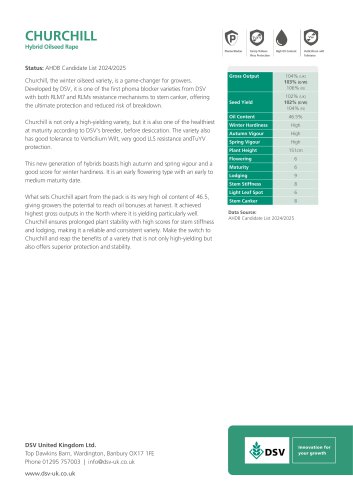 CHURCHILL
1 Page
 Spring Oilseed Rape
6 Pages
 SENDERO
2 Pages
 ARMAN
ARMAN2 Pages
 DART
DART1 Page
 MIRACULIX CL
3 Pages
 PINACO
3 Pages
 LOXTON
2 Pages
 BEATRIX CL
3 Pages
 DUKE
DUKE2 Pages
 DOLPHIN
2 Pages
 DEVIL
DEVIL2 Pages
 CROCODILE CR
3 Pages
 EXPEDIA
3 Pages
 Darling
3 Pages
 LAGONDA
2 Pages
 LUMEN
LUMEN2 Pages
 MENTHAL CR
2 Pages
 THEODORE
4 Pages
 LIROYAL
5 Pages
 INCENTIVE
2 Pages
 CLICK CL
2 Pages
 OLYMPUS
2 Pages
 MOVANNA
3 Pages
 LIKEIT
5 Pages
 PLURAX CL
2 Pages
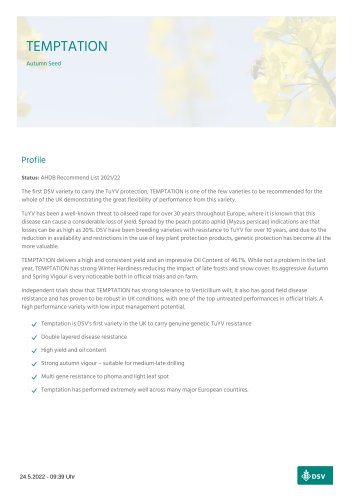 Temptation
3 Pages
 Verticillium Wilt Tolerance
2 Pages
 Product Guide
27 Pages
 TerraLife
6 Pages
 Harvest Update
1 Page
 Clearfield
2 Pages
 BetaMaxx DT
1 Page
 Dualis
1 Page
 Dariot
2 Pages
- Corn seed
- Straw cereal seed
- Hybrid corn seed
- Oleaginous seed
- Fodder
- Grain corn seed
- Silage corn seed
- Animal feed fodder
- Resistant to lodging corn seed
- Dent corn seed
- Wheat seed
- Early corn seed
- Helminthosporiosis resistant corn seed
- Rust resistant wheat seed
- Winter wheat seed
- Pasture fodder
- Rape seed
- Flint corn seed
- Seed turf
- Medium early corn seed