
- Catalogs
- HIFI FILTER
- HIFI-FILTER-Industry

- Products
- Catalogs
- News & Trends
- Exhibitions
HIFI-FILTER-Industry

HIFI-FILTER-Industry
- Filter Cartridges: Includes standard and special cartridges for various applications.
- Panel Filters: Designed for different filtration needs.
- Filter Bags: Used for dust and particle filtration.
- Air Filters: Specifically for fumes and dust extraction.
- Vacuum Cleaners: For industrial cleaning purposes.
- Micron Size: The document explains the size of a micron and provides a conversion chart for US mesh sizes to microns.
- Beta Report: Details on filtration efficiency with nominal and absolute ratings.
- Customer Support: Tailored services, technical advice, and on-site assistance.
- IT Solutions: Customized solutions for client needs.
- Global Presence: Products distributed in 120 countries with a large inventory of 30,000 references.
- Quality Assurance: Certified quality with a dedicated laboratory for analysis and control.
- Compact and lightweight design.
- High flow rating and compatibility with various fluids.
- Low maintenance cost and suitable for cutting oils.
- Constructed with an aluminum body.
- Working temperature ranges from -30°C to +120°C depending on the model.
- Flow rates vary from 6 L/min to 450 L/min.
- Working pressure ranges from 7 bar to 420 bar.
- Filtration ratings range from 5 µm to 125 µm, using materials like fiber glass, cellulose, and wire mesh.
- By-pass valves are available with settings from 1.75 bar to 6 bar, or not included in some models.
- Various models are available with different port sizes (from ¼" to 1½" BSP).
- Dimensions and weights vary across models, with detailed specifications provided for each.
- Pressure drop curves are provided for different filter elements, indicating performance at various flow rates.
- Visual and electrical clogging indicators are available with settings from 1.25 bar to 8 bar.
- Spare seal kits are available for different filter models.
- Function: Designed to improve system efficiency by reducing fluid aeration, foaming, and cavitation, thereby extending pump life.
- Design: Features two concentric tubes with discharge holes 180° opposed to minimize fluid turbulence.
- Specifications: Operating temperature up to +90°C, flow rates from 50 to 950 L/min, and various port sizes (¾" to 3" BSP and NPT).
- Purpose: Filters air compensating for oil volume variations in hydraulic tanks.
- Micron Rating: Ranges from 2 to 100 µm depending on the model.
- Flow Rates: Capable of handling flows from 100 to 30,000 L/min.
- Installation: Available in screw-on and weld-on models, with options for exchangeable and non-exchangeable elements.
- Ensure compatibility with existing systems by checking port sizes and flow requirements.
- Consider the operating environment to select appropriate materials and pressure ratings.
- Applications: Suitable for oils, emulsions, and hydrocarbons. Avoid contact with alcohol and solvents. Special versions with Pyrex glass are available for high temperatures.
- Materials: Options include plastic or aluminum, with specific dimensions provided for each type.
- Working Conditions: Pressure and temperature ranges vary by material, with aluminum capable of handling higher temperatures and pressures.
- Applications: Designed for oils, emulsions, and hydrocarbons.
- Specifications: Maximum working pressure of 1 bar and temperature range from -20°C to +80°C. Includes options with thermometers.
- Functionality: Used for monitoring fluid levels in tanks, providing a visual signal when minimum levels are reached. Contacts are normally open and close upon reaching the minimum level.
- Applications: Suitable for mineral oils and aqueous emulsions, avoiding contact with alcohol and solvents.
- Electrical Characteristics: Protection as per IP67, with AC and DC capabilities up to 250 V - 0.5 A.
- Importance of Clean Oil: Essential for optimal machine operation, with contamination responsible for 80% of oil-related malfunctions.
- Contamination Details: Includes both solid and liquid pollutants, with metal particles and sludge affecting oil quality.
- Triple R Filtration: Utilizes axial micro-filtration with a 114 mm thick cellulose filter, designed for high dirt retention and water absorption.
- 3-Step Micro Filtration: Large particles are retained on the filter surface, smaller particles in the upper zone, and the finest particles in the compressed zone, with water and sludge absorbed by cellulose.
- Working Pressure: Ranges from 0 to 400 bar depending on the system.
- Temperature Range: Typically from 0 to +80°C.
- Flow Rates: Vary from 1 to 6 L/min.
- Viscosity: Suitable for fluids with viscosities from 5 to 220 cSt, with higher viscosities available on request.
- Working Temperature: Ranges from +52°C to +120°C depending on the model.
- Micron Rating: Varies from 0.1 to 150 µm.
- Pressure Drop: Final recommended pressure drop ranges from 1.5 to 2.0 bar, with maximums up to 5.5 bar.
- Flow Rate: Maximum flow rates range from 3 to 100 L/min.
- Media Types: Include cotton, stainless steel, extruded activated carbon, meltblown polypropylene, nylon 6.6, and polyester.
- Domestic and industrial water treatment
- Electroplating and chemical industries
- Food and pharmaceutical industries
- Paints, varnishes, solvents, inks, adhesives, and cosmetics
- Compatibility with standard filter housings
- High retention capacity and lifespan
- Wide chemical compatibility and excellent cost/efficiency ratio
- High temperature resistance and large filtration area
- Working temperature: +80°C max
- Micron rating: 0.1 → 50 µm
- Pressure drop: 2.0 bar (final recommended), 4 bar max. @ 21°C
- Flow rate: 3 → 100 L/min max. @ 10" & ∆P = 0.02 bar
- Height: 9"¾ → 40" (248 → 1016 mm)
- Media: 100% pleated polypropylene
- Industrial water treatment
- Paints, varnishes
- Food industry
- Chemical industry
- Wide chemical compatibility
- Excellent cost/efficiency ratio
- Large filtration area
- Other sizes, end caps, and filtration thresholds available on request.
- Non-toxic materials suitable for drinking water applications.
- Various housing options with different materials and specifications for specific applications such as high pressure and temperature.
The document provides detailed specifications for various liquid filter housings and cartridges. It includes information on port sizes, materials, dimensions, and working conditions such as temperature and pressure. The housings are made from materials like polyamide reinforced with nylon, polypropylene, brass, and stainless steel, with gaskets made from EPDM or nitrile.
The document outlines the use of filter housings for applications such as reverse osmosis prefiltration, water treatment, and process water in electronics and chemistry. It emphasizes the importance of selecting the appropriate cartridge type based on flow rate, material, and working temperature.
The filter housings and cartridges comply with various standards and certifications, including DESP 97/23/CE for Liquids-Group 2, ATEX EX II 2G, and FDA certification. These ensure safety and compatibility for use in different industrial applications.
The document recommends using high retention capacity cartridges to increase lifespan and reduce the number of cartridges needed. It also suggests compact filter housings to save space and improve efficiency.
The tables provide detailed dimensions and specifications for each housing and cartridge model, including flow rates, pressure limits, and material compatibility. Charts illustrate the relationship between flow rate and pressure drop for different micron ratings, helping users select the appropriate filtration level.
Applications include industrial water treatment, power generation, food and beverage processing, and chemical industry. Advantages highlighted are high flow rates, excellent cost/efficiency ratio, and high retention capacity, which contribute to longer service life and reduced maintenance costs.
The document outlines various liquid filter housings and bag filters, detailing their specifications such as material, size, pressure, and flow capacity. The housings are made from stainless steel (316L) and are suitable for different types of fluids and filter elements. The document also specifies the working temperature and micron ratings for different media types, including polypropylene and polyester.
The document provides guidelines on the use of filter housings and bags, including the importance of selecting the correct size and material for specific applications. It also highlights the need for proper venting and gasket selection to ensure tightness and efficiency.
The filter housings comply with the DESP 97/23/CE regulation for liquid group 2, ensuring they meet safety and performance standards.
The document recommends using DUOFLO baskets for extended lifespan and reduced liquid retention. It also suggests using specific HIFI filter housings for optimal performance.
The tables provide detailed dimensions, flow rates, and pressure ratings for various filter models. A chart illustrates the relationship between pressure drop and flow rate for different micron ratings, emphasizing the importance of selecting the appropriate filter for the desired application.
The filters are suitable for industrial water treatment, loaded liquids, and food liquids. Advantages include a longer lifespan, reduced liquid retention, and elimination of media breakage risks. The document also highlights the high retention capacity for particles and oils, improving performance and reducing operating costs.
The document mentions complementary products such as PPI filtration foams and PH test strips, which are used for various filtration and testing applications.
- Weight: 260 gr/m²
- Air Permeability: 180 m³/m²/h at 200 Pa
- Maximum Temperature: 120°C (dry), 90°C (moist)
- Maximum Residual Particles: 0.008 between 0.2 µm and 2 µm
- BIA Classification: M
- Filtering Surface: Various dimensions available on request
- Adaptable for Trumpf and Keller machines
- Available in various dimensions and filtering surfaces
- Available for brands like KOMORI, BALDWIN, TECHNOTRANS, and MG ELECTRIQUE
- Dimensions and applications vary per model
- Made from materials like cellulose, metal, and fiber glass
- Some models include a by-pass feature
- Various models available for different flow rates and applications
- Compliant with ISO 8573-1:2010 standards for air quality
- Made from materials like cellulose and polyester
- Available with different connection types and filtration degrees
- Suitable for marine applications and high pulsation environments
- Various flow rates and dimensions available
- Class 0 to X, specifying humidity, oil, vapor, and solid particles limits
- Detailed specifications for each class provided
- Includes compressors, vacuum pumps, air/oil separators, and more
- General and specific applications outlined
- Marine application suitability.
- Various connection types including male and female threaded connections.
- Options for special dimensions and fittings upon request.
- Cyclone pre-filters for extreme vacuum filtration in dusty environments.
The document outlines the characteristics and specifications of liquid separators for vacuum pumps. Key features include an aluminum head, polycarbonate container, and components made from stainless steel (Inox). The maximum operating temperature is 125°C. The separators have a drain throttle of ½" BSP and a manometer connection of ¼" BSP.
The document provides detailed dimensions and flow rates for various models of liquid separators, ranging from 1" to 4" port sizes. The retention volume and flow rates are specified for each model, with flow rates ranging from 1.6 m3/h to 5.7 m3/h.
The separators combine two functions: liquid separation and air filtration. They offer protection against harmful liquids that can damage the lubrication oil of vacuum pumps and prevent emulsions. The efficiency is noted as 99% for liquids and particles as small as 5 µm. The construction is in carbon steel with a blue enamel coating.
These separators are suitable for use in food packaging, pharmaceutical, chemical, and metallurgical industries.
The document also discusses air filters for autoclaves, emphasizing their role in sterilization processes. These filters are designed to handle high-temperature steam and are made from corrosion-resistant materials. They ensure 100% efficiency for particles down to 0.01 µm and are recommended to be replaced every six months or when the vacuum break cycle exceeds three minutes.
The document lists various air filters for vacuum pumps, compressors, and pressurizers, with detailed dimensions and specifications for each model. It also mentions the availability of custom elements for specific applications, such as low-pressure or high-temperature environments.
- Materials: Products are made from materials like sintered bronze, acetalic resin, polyethylene, stainless steel, polypropylene, and galvanized steel.
- Pressure and Temperature: Most products operate at a pressure of 10 bar, with temperature ranges varying by material (e.g., polypropylene: 5 to 60°C).
- Noise Reduction: Coalescent mufflers offer noise reduction up to 69 dB.
- Silencers: Designed for various applications, including vacuum pumps and exhaust systems, with options for special heat treatments.
- Coalescent Mufflers: Feature a working temperature range of -20 to +100°C and are free from copper and PTFE.
- Gas Filters: Offer high efficiency in removing solids and liquids from natural gas, with efficiencies up to 99.99% for particles ≥10 µm.
- Filter Tubes: Made from borosilicate glass microfibre, suitable for gas and liquid applications, with high filtration efficiency.
- Filtration Efficiency: Gas filters achieve up to 99.9998% efficiency for air and gas at 0.3 µm.
- Flow Rates: Detailed flow rates are provided for each product, indicating suitability for various industrial applications.
- ISO and EN Standards: Products comply with standards such as ISO 16890 and EN 779:2012, ensuring high performance and reliability.
The document provides detailed specifications for high solids coatings and filters used in spray booths. It includes information on pleats per meter, which varies depending on the type of overspray used, such as paint or varnish. The standard pleats per meter range from 25 to 30, with other dimensions available upon request. The filters have a thickness of 70 mm and a recommended air speed of 0.25 to 1 m/s. Initial pressure drop is 12 Pa at 0.5 m/s, with a final recommended pressure drop of 128-150 Pa. The holding capacity is 20 kg/m², and filtration efficiency is up to 99.2% by weight.
The document outlines the standard mounting procedures for filters, specifying the number of pleats per meter for different overspray types. It also provides fire classification details, with a fire class of M2.
A comprehensive recommendation table is included, detailing the appropriate type of media for various pollutants and materials. For example, PTFE-coated polyester is recommended for steel dust and smoke, while anti-static polyester is suggested for explosive dusts like coal and flour.
The document adheres to specific fire safety standards, with filters classified under fire class M2. It also specifies the use of different media types based on pollutant characteristics, such as hygroscopic or explosive properties.
The tables provide detailed dimensions and media types for various filter cartridges, including those adaptable for specific applications like fume extraction. The tables also specify the filtering surface area and media characteristics, such as hydrophobic and oleophobic properties.
The document emphasizes the importance of selecting the correct filter media based on the pollutant's characteristics to ensure optimal filtration efficiency and safety. It also highlights the availability of custom dimensions and media upon request.
- Filter Media: The filters are primarily made from polyester, with some models featuring antistatic properties or PTFE membranes for enhanced performance.
- Efficiency: The filters offer a 99.9% efficiency rate for particles larger than 1 µm.
- Dimensions: Various dimensions are provided for different models, with specific measurements for height, diameter, and filtering surface area.
- Suitable for use in compressors, boosters, motors, electrical equipment cabinets, and control rooms.
- Custom dimensions and media are available upon request to suit specific industrial needs.
- Several models are available, each with unique dimensions and filtering surfaces, such as the ASR and ASP series.
- Options include standard polyester, antistatic polyester, and polyester with PTFE membranes.
- Other dimensions and media types can be requested to meet specific requirements.
- Detailed tables provide comprehensive data on each filter model, including part numbers and specific measurements.
Catalog excerpts
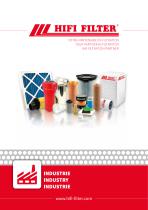
VOTRE PARTENAIRE EN FILTRATION YOUR PARTNER IN FILTRATION IHR FILTRATION PARTNER INDUSTRIE INDUSTRY INDUSTRIE www.hifi-filter.com
Open the catalog to page 1
MACHINE TOOLS
Open the catalog to page 2
DUST EXTRACTION
Open the catalog to page 3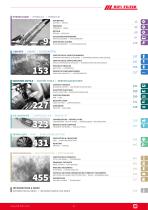
HYDRAULIQUE | HYDRAULIC | HYDRAULIK ASPIRATION ACCESSOIRES RÉSERVOIRS SUCTION | ANSAUG PRESSURE | DRUCK RETURN | RÜCKLAUF TANK ACCESSORIES | TANK-ZUBERHÖR FLUID MANAGEMENT | FLUIDPFLEGESYSTEM LIQUIDES | LIQUIDS | FLÜSSIGKEITEN CARTOUCHES & CORPS STANDARDS CARTOUCHES & CORPS SPÉCIAUX POCHES FILTRANTES PRODUITS COMPLÉMENTAIRES STANDARD CARTRIDGES & HOUSINGS | STANDARDELEMENTEN UND GEHÄUSE SPECIAL CARTRIDGES & HOUSINGS | SONDERELEMENTEN UND GEHÄUSE BAG FILTER | FILTERBEUTEL ADDITIONAL PRODUCTS | ZUSATZPRODUKTE MACHINES OUTILS | MACHINE TOOLS | WERKZEUGMASCHINEN CENTRE D'USINAGE INJECTION PLASTIQUE...
Open the catalog to page 5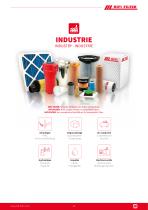
INDUSTRY - INDUSTRIE HIFI FILTER, le leader européen des filtres compatibles. HIFI FILTER, the European leader in compatible filters. HIFI FILTER, der europäische Marktführer für kompatible Filter. Aéraulique HVAC Klima und Belüftung Air comprimé Compressed air Druckluft Hydraulique Hydraulics Hydraulik Dépoussiérage Dust extraction Entstaubung Liquides Liquids Flüssigkeiten Machines outils Machine tools Werkzeugmasch
Open the catalog to page 6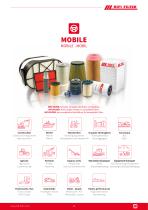
MOBILE - MOBIL HIFI FILTER, le leader européen des filtres compatibles. HIFI FILTER, the European leader in compatible filters. HIFI FILTER, der europäische Marktführer für kompatible Filter. Construction Construction equipment Baumaschinen Marine Marine Marine Agricole Agriculture Landwirtschaft Forestier Forest Holzernte Espaces verts Parks & Golf Golf und Gartentechnik Poids lourds / Bus Trucks / Buses LKW / Busse Automobile Passenger vehicles PKW Motos - Quads Motorcycles - ATV Motorräder - Quads Manutention Groupes électrogènes Handling equipment Power generators Gabelstapler und Hebetechnik...
Open the catalog to page 7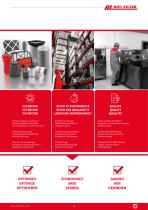
FILTRATION FILTRATION FILTRATION STOCK ET DISPONIBILITÉ STOCK AND AVAILABILITY LAGER UND VERFÜGBARKEIT QUALITÉ QUALITY QUALITÄT Filtration adaptée à vos besoins Gamme complète et diversifiée Une seule marque, un seul fournisseur 41 000 m² de stockage 30 000 références stockées 120 pays desservis Qualité certifiée HIFI FILTER® Laboratoire de contrôles et d’analyses Garantie produit Filtration for your needs Complete and diversified range One stop filter shop 41 000 m² of storage facilities 30 000 references in stock Distributed in 120 countries Certified HIFI FILTER® quality Analysis and control...
Open the catalog to page 8
SERVICES SERVICES SERVICES SUPPORTS SUPPORT UNTERSTÜTZUNG HIFI FILTER® Services client sur mesure Conseil technique et suivi sur site Solutions informatiques personnalisées Recherches par applications et équivalences Outils simples et intuitifs Informations actualisées Au service de nos clients depuis 1977 500 collaborateurs 30 000 entreprises nous font confiance Tailored customer service Technical advise and on-site help Customized IT solutions Search by applications and cross-references Easy and intuitive tools Up to date information Serving our customers since 1977 500 coworkers 30 000 companies...
Open the catalog to page 9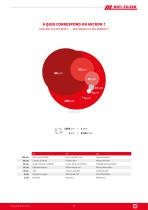
À QUOI CORRESPOND UN MICRON ? HOW BIG IS A MICRON ? - WIE GROSS IST EIN MIKRON ? Grain of table salt Cheveu humain Human hair Seuil limite de visibilité Lower limit of visibility Globules blancs White blood cell Weisse Blutzellen Talcum powder Globules rouges Rote Blutzellen
Open the catalog to page 10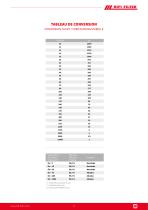
TABLEAU DE CONVERSION CONVERSION CHART / UMRECHNUNGSTABELLE Rapport Bêta * Beta Report * Betarapport * Efficacité Efficiency Leistung * x = Taille des particules en µm * x = Particles size in µm * x = Grösse der Partikel in µm
Open the catalog to page 11
HYDRAULIQUE HYDRAULICS HYDRAULIK www.hifi-filter.com
Open the catalog to page 13
ASPIRATION SUCTION ANSAUG CRÉPINES D’ASPIRATION SUCTION STRAINERS SAUGKÖRBE DISQUES FILTRANTS FILTERING SEGMENTS FILTRIERSCHEIBEN FILTRES HYDRAULIQUES EN LIGNE D’ASPIRATION IN LINE SUCTION HYDRAULIC FILTERS ANSAUGLEITUNGSFILTER
Open the catalog to page 17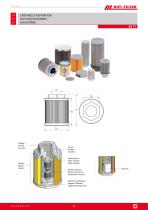
CRÉPINES D’ASPIRATION SUCTION STRAINERS SAUGKÖRBE SH 77 Filetage Thread Gewinde Flasque Flauge Flansch 6 pans 6 Edges 6 Kanten Média filtrant Filter medium Filter medium Renfort intérieur Reinforced interior Verstärkter Innenteil Élément magnétique Magnetic Element Magnetisches Element
Open the catalog to page 18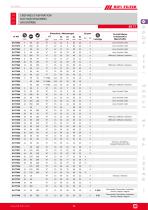
CRÉPINES D’ASPIRATION SUCTION STRAINERS SAUGKÖRBE SH 77 Caractéristiques Characteristics Eigenschaften Lisse / Smooth / Glatt Lisse / Smooth / Glatt Lisse / Smooth / Glatt Lisse / Smooth / Glatt Déflecteur / Deflector / Abweiser Déflecteur / Deflector / Abweiser Lisse / Smooth / Glatt Lisse / Smooth / Glatt Lisse / Smooth / Glatt Déflecteur / Deflector / Abweiser Déflecteur / Deflector / Abweiser Déflecteur / Deflector / Abweiser Lisse / Smooth / Glatt Tout Inox / All Stainless Komplett Edelstahl rostfrei Démontable / Removable / Ausbaubar Aimant / Magnet / Magnet
Open the catalog to page 19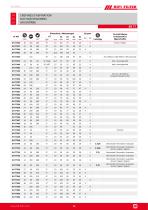
CRÉPINES D’ASPIRATION SUCTION STRAINERS SAUGKÖRBE SH 77 Caractéristiques Characteristics Eigenschaften Aimant / Magnet Avec diffuseur / With diffuser / Mit Zerstäuber Male / Aussengewinde Male / Aussengewinde Tout Inox / All Stainless Komplett Edelstahl rostfrei Démontable / Removable / Ausbaubar Démontable / Removable / Ausbaubar Aimant / Magnet / Magnet Démontable / Removable / Ausbaubar Démontable / Removable / Ausbaubar Démontable / Removable / Ausbaubar Aimant / Magnet / Magnet
Open the catalog to page 20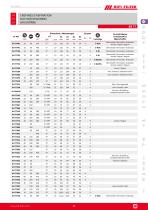
CRÉPINES D’ASPIRATION SUCTION STRAINERS SAUGKÖRBE SH 77 Caractéristiques Characteristics Eigenschaften Démontable / Removable / Ausbaubar Aimant / Magnet / Magnet Démontable / Removable / Ausbaubar Démontable / Removable / Ausbaubar Démontable / Removable / Ausbaubar Aimant / Magnet / Magnet Démontable / Removable / Ausbaubar Démontable / Removable / Ausbaubar Aimant / Magnet / Magnet Aimant / Magnet Inox / Stainless / Edelstahl rostfrei Inox / Stainless / Edelstahl rostfrei Lisse / Smooth / Glatt Tout Inox / All Stainless Komplett Edelstahl rostfrei Male / Aussengewinde Aimant / Magnet Tout...
Open the catalog to page 21All HIFI FILTER catalogs and technical brochures
 HIFI-FILTER-Hair-Filter
264 Pages
 HIFI-FILTER-Oldtimers-Youngtimers
100 Pages
 HIFI-FILTER-Chinese-applications
90 Pages
 HIFI-FILTER-HVAC
72 Pages
 HIFI-FILTER-AC-Dryers
323 Pages
 HIFI-FILTER-Ski-Lift
190 Pages
 HIFI-FILTER-Parks-Golfs
561 Pages
 MOBILE FILTRATION & ACCESSORIES
602 Pages


