- Catalogs
- MSL GmbH & Co. KG
- Organic - Squash - Delicata

Organic - Squash - Delicata

Organic - Squash - Delicata
Catalog excerpts

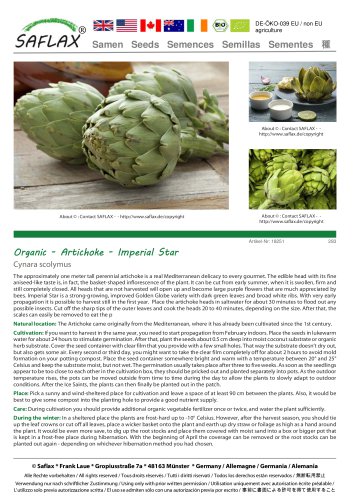
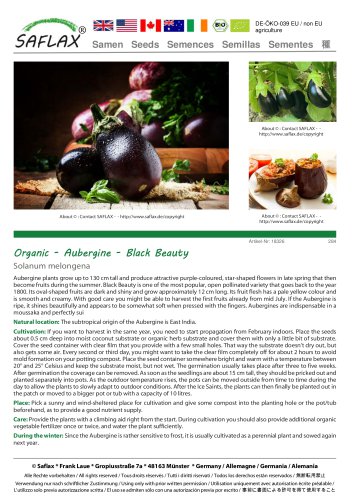
Samen Seeds Semences Semillas Sementes 種 About © : Contact SAFLAX - http://www.saflax.de/copyright About © : Contact SAFLAX - - http://www.saflax.de/copyright About © : Contact SAFLAX - http://www.saflax.de/copyright Organic - Squash - Delicata Cucurbita pepo The fruits of the Delicata are cream-coloured, longish with a green vein. This variety produces tasty, well-textured fruit flesh that is highly suitable for stuffing and baking. Every plant bears five to seven fruits with about 20 cm length. Since the Delicata grows somewhat more bushy it will occupy less space in the garden than other varieties. Pumpkins are very versatile in their use in the kitchen. They are well suited for preparing a soup, stew or curry. Squash can also be a tasty aromatic alternative to potato wedges. Blend some herbs and oil in a bowl and spread the marinade mixture onto pu Natural location: The squash has its origin in South America. Today, it is cultivated in all warm regions all over the world. Cultivation: You may sow the seeds out in the open starting from mid May. However, with pre-cultivation indoors on your windowsill starting from mid March, you can achieve a richer harvest. Place only one or two seeds about 2 cm deep into a bigger pot with moist potting substrate, as pumpkins grow sweepingly wide. Cover the seed container with clear film that you provide with a few small holes. That way the substrate doesn’t dry out, but also gets some air. Every second or third day, you might want to take the clear film completely off for about 2 hours to avoid mold formation on your potting compost. Place the seed container somewhere bright and warm with a temperature between 20° and 25° Celsius and keep the substrate moist, but not wet. The germination usually takes place after two to three weeks. After another month, you may shift the plants into bigger pots or plant them out in the garden (not more than 8 plants per square meter). It usually takes about 2 months from the germination to the flower formation, and another month until fruit formation. Place: Pick a sunny place for cultivation. Care: Pumpkins prefer nutritious subsoil and grow nicely in substrate that has been enriched with humus. If you grow the squash with regular garden soil, it will regularly need some fluid fertilizer. Make sure to water the plant regularly and plentiful. To protect the pumpkin from rotting, you might want to place a wooden board underneath the fruit so it doesn’t lie on the ground directly. Towards the end of the vegetation period, you can cut off bigger leaves to allow the plant to spend more energy on developing the fruits. Pumpkins are very popular with snails, you might want to place a slug fence around for protection. During the winter: Sow again in the next year. © Saflax * Frank Laue * Gropiusstraße 7a * 48163 Münster * Germany / Allemagne / Germania / Alemania Alle Rechte vorbehalten / All rights reserved / Tous droits réservés / Tutti i diritti riservati / Todos los derechos están reservados / 無断転用禁止 Verwendung nur nach schriftlicher Zustimmung / Using only with prior written permission / Utilisation uniquement avec autorisation écrite préalable / L'utilizzo solo previa autorizzazione scritta / El uso se admiten sólo con una autorización previa p
Open the catalog to page 1All MSL GmbH & Co. KG catalogs and technical brochures
 Indian Cedar
1 Page
 Organic - Nettle
1 Page
 Organic - Wild Rocket
1 Page
 Levant Cotton
1 Page
 Chicory
1 Page
 Common Tobacco
1 Page
 Sunflower Titan
1 Page
 Organic - Coriander
1 Page
 Organic - Chives
1 Page
 Organic - Basil Genovese
1 Page