
- Catalogs
- pennington
- JESUP MAXQ II


JESUP MAXQ II

JESUP MAXQ II
- Jesup MaxQ II® is a cool season perennial pasture ideal for providing high-quality forage for grazing livestock such as cattle, sheep, and horses from fall to early summer. It is safe for pregnant mares and most productive between September-December and March-June.
- It is also suitable for high-quality hay and baleage production.
- Excellent for fall stockpiling and managed grazing during winter months.
- Jesup MaxQ II® is an enhanced version of the Jesup MaxQ® tall fescue, incorporating the novel endophyte technology MaxQ II® to improve seedling vigor and persistence under grazing.
- It is a non-toxic variety, safe for all grazing animals, and offers benefits like enhanced seedling vigor, greater tolerance to grazing, and efficient nutrient use without the harmful effects of traditional toxic fescue.
- Non-toxic and safe for all grazing animals, including pregnant mares.
- Provides abundant, high-quality forage with crude protein levels of 15-16% and total digestible nutrient content of 60% or higher.
- Promotes better animal health and higher gains and conception rates compared to toxic fescue.
- Adapted to traditional fescue regions in the U.S., Jesup MaxQ II® thrives in areas with suitable soils and/or irrigation.
- Remove toxic tall fescue and unwanted grasses before planting. Establish a firm seedbed for optimal growth.
- Recommended seeding rate is 15-20 lbs/acre for prepared seedbeds or 20-25 lbs/acre for sod-seeding.
- Planting depth should be 1/4" to 1/2". Avoid planting too deep to ensure good emergence.
- Planting dates vary by region, with specific windows for Southern, Southeastern, South Central, Mid-South, Midwest, and Northeastern states.
- Fertilize with lime to maintain a pH of 6.0-6.5 and apply phosphorus, potassium, and nitrogen as per soil tests.
- Use rotational grazing to maintain 3-4" of forage growth post-grazing.
- Apply up to 150 lbs/acre of nitrogen annually in split applications before rapid growth periods.
- Maintain soil pH and nutrient levels as recommended by soil tests.
- Rotate cattle more frequently during heat and drought stress periods.
- Stockpile forage during rapid growth for winter grazing and avoid contamination with toxic fescue hay.
Catalog excerpts
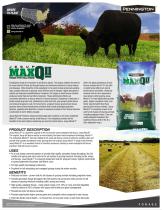
May be adapted to some sites with suitable soils and/or irrigation Jesup MaxQ II® Endophytes (fungi) are important to tall fescue plants. The fungus enables the plant to be more tolerant of heat and drought stress and enhances tolerance to some insects and diseases. Other benefits of the endophyte to the plant include enhanced seedling vigor, greater tolerance to grazing, more efficient use of nitrogen, higher phosphorus uptake and improved competitiveness. However, the fungus in most fescue varieties produces toxins that are harmful to livestock. These detrimental effects are commonly referred to as fescue toxicity or fescue toxicosis. Symptoms of toxicosis in cattle include long hair coat, intolerance to heat and cold, poor growth performance and reduced pregnancy rate. On horse farms, pregnant mares grazing toxic fescue pastures have serious reproduction problems that include prolonged gestation, dystocia, agalactia and abortions. Losses to livestock producers from fescue toxicosis is estimated to be $1 billion annually. Jesup MaxQ II® features advanced technology that combines a non-toxic endophyte (MaxQ II®) with a proven variety of tall fescue. This endophyte provides all the benefits to the plant without producing any harmful animal toxins. Jesup MaxQ II® offers the plant persistence of toxic fescue varieties like KY 31 but with no detrimental effects on animal performance and health. University research and on-farm experience have shown cattle grazing Jesup MaxQ II® to have significantly greater gains, higher conception rates, and better overall health than those grazing toxic fescue varieties. Jesup MaxQ II® is university proven to be safe for all classes of grazing animals including pregnant mares. They are widely adapted throughout the traditional fescue belt of the U.S. (See adaptation map.) PRODUCT DESCRIPTION Jesup MaxQ II® is a powerful upgrade to the successful novel endophyte tall fescue, Jesup MaxQ®. The original Jesup tall fescue variety is now boasting the latest novel endophyte technology, MaxQ II®. The endophyte MaxQ II® has been added to the Jesup tall fescue variety to enhance seedling vigor and provide even greater persistence under grazing than the original Jesup MaxQ® in tough environments. Jesup MaxQ II® is an excellent choice for livestock producers planting a novel endophyte tall fescue anywhere that tall fescue is grown. • As a cool season perennial pasture to provide high quality, abundant forage throughout the fall months into spring and early summer for all classes of grazing livestock including cattle, sheep and horses. Jesup MaxQ II® is university tested and safe for pregnant mares. Highest productivity is during September-December and March-June. • For high quality hay/baleage production. • Excellent for fall stockpiling and managed grazing during the winter months. • Produces no toxins - proven safe for all classes of grazing animals including pregnant mares. • Provides abundant forage throughout the fall months into spring and early summer for all classes of grazing livestock including cattle, sheep and horses. • High quality, palatable forage - crude protein levels of 15-16% or more and total digestible nutrient content of 60% or higher with proper soil fertility and good management. • Persists like toxic tall fescue varieties. • Provides significantly higher animal gains and conception rates compared to toxic fescue. • Promotes better overall health – no fescue foot; no long hair coats; no sale barn discounts. Pennington with design is a registered trademark of Pennington Seed, Inc. MaxQ II is a trademark of Grasslanz Te
Open the catalog to page 1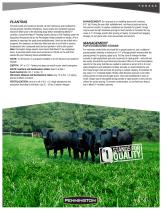
PLANTING For best results and maximum benefit, all toxic tall fescue and troublesome annual grasses including cheatgrass, rescue grass and unwanted ryegrass should be killed prior to the blooming stage before establishing MaxQ II® varieties. (Consult the MaxQ® Planting Guides (Spring or Fall Planting) under the Agriculture Resources tab on the Pennington forage website for details.) A firm seedbed is important for good stand establishment. Seed can be drilled into a prepared, firm seedbed, no-tilled into killed sod with a no-till drill or surface broadcasted onto a prepared seed bed and packed...
Open the catalog to page 2All Pennington catalogs and technical brochures
 MaxQ
MaxQ2 Pages
 Wintergrazer 70 Rye
1 Page
 AU SUNRISE
2 Pages
 Patriot White Clover
1 Page
 Cheyenne II
1 Page
 COVER CROPS
6 Pages
 Sahara II
1 Page
 AU Sunrise Brochure
2 Pages
 PEW24 Bermuda
2 Pages
 Durana Pecan Orchards
5 Pages
 durana wildlife food plots
6 Pages
 Arden
Arden1 Page
 SUPERGRAZE
2 Pages
 THE DURANA
4 Pages
 Mallard
2 Pages
 Athletic Field Mixture
1 Page
- Fertilizer
- Flower
- Mineral fertilizer
- Granular fertilizer
- Liquid fertilizer
- Fertilizer with trace elements
- Organic fertilizer
- Garden flower
- NPK fertilizer
- Foliar application fertilizer
- Ground application fertilizer
- Perennial flower
- Annual flower
- Floral seed
- Fodder
- Cover crop
- Animal feed fodder
- Biological fertilizer
- Annual floral seed
- Rich in magnesium fertilizer