


- Company
- Products
- Catalogs
- News & Trends
- Exhibitions
Glycoline

Glycoline
Overview
This document presents Glycoline, a nutritional supplement designed to improve dairy cow performance by reducing metabolic stress and stimulating feed intake. It focuses on managing metabolic stress through a synergistic blend of four glucogenic agents that serve as glucose precursors and neoglucogenesis catalysts.
Key Components and Their Roles
- Monopropylene glycol, Glycerol, Sorbitol, Propionate: These four glucogenic agents work synergistically to increase blood glucose levels and reduce ketone bodies, supporting energy metabolism.
- Cobalt (Vitamin B12 precursor): Essential for energy metabolism and synthesis of methionine and choline.
- Niacin (Vitamin PP): Inhibits lipolysis, reduces circulating non-esterified fatty acids (NEFA), and stimulates glucogenic metabolism.
Physiological Importance of Glucose
Glucose is critical for:
- Milk production, as it is the sole precursor for lactose synthesis in the udder.
- Immune system efficiency, with activated leucocytes consuming up to 2 kg of glucose daily.
- Reproductive health, necessary for follicle recruitment, growth, and rapid uterine involution.
Systemic inflammation around calving and various stressors increase glucose consumption, making supplementation vital.
Metabolic Stress and Ketosis
Subclinical ketosis remains a significant issue during the transition period, calving, and under stress conditions such as heat, social, transportation, and weaning stress. Key points include:
- 43% of cows between 3 to 16 days in milk (DIM) test positive for beta-hydroxybutyrate (BHBA), indicating ketosis.
- Ketosis leads to increased risk of left displaced abomasum (LDA), higher culling rates, and reduced milk yield.
- Economic cost per case of ketosis is approximately €289, including losses from reproduction, milk production, diagnosis, therapeutics, and labor.
Clinical and Field Trial Results
- Feeding Glycoline (300 g/day from 20 days prepartum to 30 days postpartum) increased blood glucose and decreased BHBA levels, improving milk production and metabolic health.
- Field trials under heat stress conditions (THI 75-85) showed Glycoline supplementation increased milk yield by an average of +2.34 kg/cow at 50 DIM and raised plasma glucose by +5.1 mg/dL while reducing BHBA by -0.4 mmol/L.
- Data from multiple countries (Vietnam, Spain, China, France, Iran, Saudi Arabia, Serbia) confirm consistent positive effects on milk yield and metabolic parameters.
Administration and Dosage Recommendations
Glycoline is available in liquid, powder, and pellet forms with flexible dosing options:
- Dairy cows: 150-200 mL/day when THI > 70, administered via top feeding on TMR, mixed in TMR, automatic feeders, or drinking water dosing pumps.
- Goats and ewes: 30 mL or 50 g one month before kidding; 50 mL or 70 g one month after kidding to prevent pregnancy toxemia and ketosis.
- Beef cattle: 40 mL per 100 kg live weight at arrival and before slaughter.
- Ketosis treatment: 400 mL/cow/day for 5 days; drench solution option at 500 mL/cow.
Product Variants and Additional Solutions
- Glycoline Sweet: Enhanced palatability for dairy cows.
- Glycoline Green: Contains monopropylene glycol of vegetal origin.
- Natoline: Energy booster without propylene glycol.
- Glycanion: Prevents hypocalcemia and energy deficit during close-up period.
Summary of Benefits
- Improves metabolic health by increasing blood glucose and reducing ketone bodies.
- Enhances milk production and reproductive performance.
- Mitigates effects of heat and other stressors on dairy cows.
- Supports immune function and reduces metabolic disorders such as ketosis.
References and Sources
Data and research cited include studies from the University of Aarhus, McArt et al. (2012, 2015), Kvidera et al. (2017), and various international field trials conducted between 2005 and 2018.
Contact Information
Vitalac, France - Brittany
Tel: +33 (0)2 96 21 52 78
Website: www.vitalac.eu
Catalog excerpts

Metabolic stress management Improves performances Stimulates intake Reduces metabolic stress
Open the catalog to page 1
The power line to performance A mix of glucose precursors and neoglucogenesis catalyzers Active matters > Glucose precursors for the cow: Blood glucose Blood ketone bodies • Monopropylene glycol • Glycerol • Sorbitol • Propionate • Cobalt > Cobalt is necessary for energy metabolism and for the synthesis of methionine and choline > Niacin inhibits lipolysis, reduces circulating fatty acids NEFA and stimulates glucogenic metabolism Synergy and kinetics of the 4 glucogenic agents Synergy and kinetics of the 4 glucogenic agents Blood glucose: Glucose delivery in blood Monopropylene Glycol Source:...
Open the catalog to page 2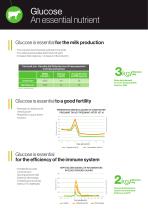
GlucoseAn essential nutrientGlucose is essential for the milk production > The only precursor for lactose synthesis in the udder > The udder glucose uptake determines milk yield > Increase in blood glucose = increase in milk production Trial result, Iran - Glycoline fed 300gr/day from 20 days prepartum to 30 days post partum Body daily demand for a cow producing 40L Overton, 1998 Glucose is essential to a good fertility > Necessary for follicle recruitment & growth > Required for a quick uterine involution Pregnant at first AI Not pregnant at first AI Glucose is essentialfor the efficiency of...
Open the catalog to page 3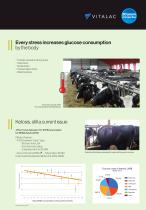
Every stress increases glucose consumption by the body > Transition period & calving stress > Heat stress > Social stress > Transportation stress > Weaning stress Cows very quickly suffer from rising ambient temperatures. Ketosis, still a current issue: 43% of cows between 3 to 16 DIM are positive for BHBA (McArt 2015) Effects of ketosis : > If SCK between 3 and 7 days : •6 .1 times more LDA •4 .5 times more culling • 2.2kg less milk in 1st 30 DIM > Every 0.1mmol/L BHBA > - 0.5 kg milk in 30 DIM Cost of subclinical ketosis (McArt et al, 2015): 289 € Subclinical Ketosis is prejudicial for reproduction...
Open the catalog to page 4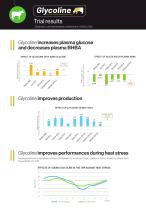
Trial results Obtained in commercial dairies worldwide from 2005 to 2016 Glycoline increases plasma glucose and decreases plasma BHBA EFFECT OF GLYCOLINE ON PLASMA BHBA Relative change in plasma Glucose compare to control, mmoL/L Relative change in plasma Glucose compare to control, MG/DL EFFECT OF GLYCOLINE ON PLASMA GLUCOSE Glycoline improves production 5 Relative change in milk Glucose compare to control, Kg/Cow/Day EFFECT OF GLYCOLINE ON MILK YIELD Glycoline improves performances during heat stress Field results in France in heat stress conditions (THI between 75 and 85 day & night) - addition...
Open the catalog to page 5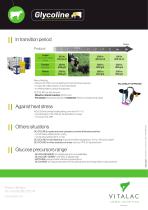
In transition period Weeks > Mixed in the TMR, or by top feeding, for fresh and close up groups > In automatic milking system or automatic feeder > In drinking water by using a dosing pump GLYCOLINE can also be used: • Mixed in a drench solution: 500mL/cow • For ketosis (clinical and subclinical) treatment: 400mL/cow/day during 5 days 150 to 200ml/cow/day for all lactating cows when THI > 70: > By top feeding on the TMR: for the best effect on intake GLYCOLINE for goats and ewes: pregnancy toxemia & ketosis prevention • 1 month before kidding: 30mL or 50g • 1 month after kidding: 50mL or 70g...
Open the catalog to page 6All VITALAC catalogs and technical brochures
 Range Vitacid for pig
4 Pages
 Vitacid Line
4 Pages

- Supplementary feed
- Animal supplementary feed
- Dry nutritional supplement
- Mineral supplementary feed
- Cattle supplementary feed
- Vitamin supplementary feed
- Digestion supplementary feed
- Feed supplement for the immune system
- Poultry supplementary feed
- Deficiency corrector feed supplement
- Silo
- Protein supplementary feed
- Feed additive
- Liquid supplementary feed
- Grain silo
- Metal silo
- Pig supplementary feed
- Powder feed supplement
- Sheep supplementary feed
- Reproduction supplementary feed